The Sleep Architecture: A Scientific Blueprint for High-Performance Recovery
How optimizing temperature, light, and sleep cycles unlocks deep recovery and focus.
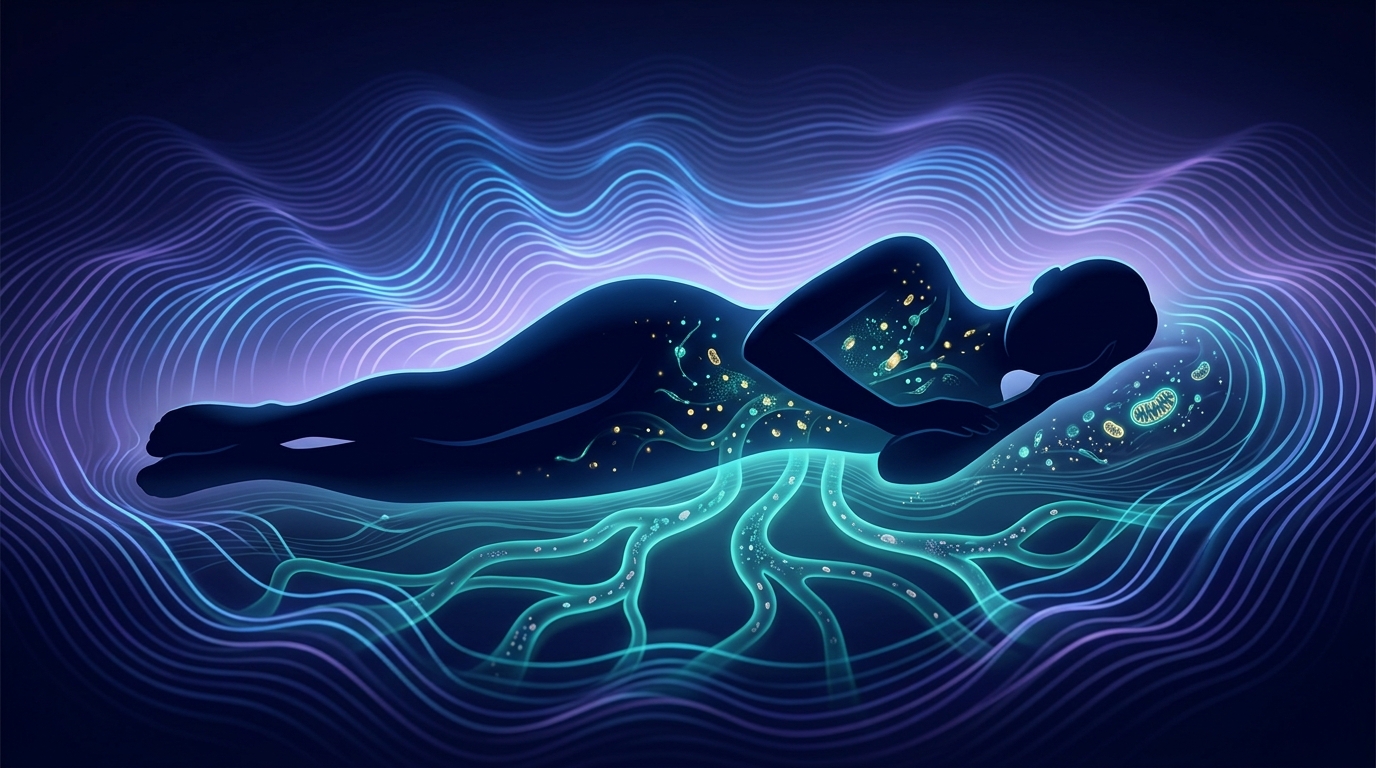
In a productivity-obsessed culture, sleep is often viewed as a luxury or a sign of weakness. However, neuroscience and physiology show that sleep is not passive downtime—it is the active, essential phase where your brain flushes out toxins, consolidates memory, and repairs cellular tissue.
Without high-quality sleep, your cognitive performance, decision-making speed, and emotional resilience drop by up to 40%.
If you want to optimize your waking hours, you must first master your sleeping hours. Here is a scientific blueprint to engineer the perfect night of recovery.
1. Light Control: Anchoring Your Circadian Clock
Your biological clock is governed by light. The eyes have specialized receptors that communicate directly with the brain to signal when to release energy hormones (cortisol) or sleep hormones (melatonin).
- Morning Light Anchor: Within 30 minutes of waking, view natural outdoor sunlight for 10–15 minutes. This triggers a healthy cortisol spike, increases alertness, and sets a timer for melatonin release approximately 16 hours later.
- Evening Light Hygiene: Blue light from smartphones and screens mimics high-noon sun, immediately suppressing melatonin production. Turn off or dim overhead lights after 8:00 PM, and use blue-light blocking software or glasses. Keep your bedroom completely dark—use blackout curtains to eliminate streetlights.
2. Temperature Regulation: The Core Temp Drop
Your body’s core temperature is naturally linked to your circadian rhythm. To initiate sleep, your core body temperature must drop by approximately 1–2°C (2–3°F).
- Cool Room Settings: The optimal ambient temperature for high-quality sleep is between 16–19°C (60–67°F). A room that is too warm prevents your body from shedding heat, leading to fragmented, shallow sleep.
- The Warm Bath Vasodilation Hack: Taking a warm shower or bath 90 minutes before bed might seem counterintuitive, but it actually cools you down. The warm water brings blood to the skin's surface, dilating your blood vessels. When you step out, you rapidly dump heat, causing a sharp drop in core temperature that signals your brain it is time to sleep.
3. The 90-Minute Sleep Cycle Rule
Human sleep is structured in cycles of approximately 90 minutes, transitioning through different stages:
- Light Sleep (NREM 1 & 2): The transition from wakefulness.
- Deep Sleep (NREM 3 & 4): The physical recovery phase, where growth hormones are released and muscles repair.
- REM Sleep (Dreaming): The mental recovery phase, where emotions are processed and memories are consolidated.
Waking up during the middle of deep sleep causes sleep inertia—that heavy, groggy feeling that can last for hours. To wake up refreshed, aim to wake up at the end of a 90-minute cycle. For example, getting 7.5 hours (5 full cycles) or 9 hours (6 full cycles) of sleep often feels better than getting 8 hours because you wake up during light sleep.
Your Evening Protocol Checklist
To put these principles into action tonight, implement this simple 3-step checklist:
- No Caffeine after 12:00 PM (caffeine has a half-life of 6 hours and quarter-life of 12 hours).
- Dim all artificial screens and put your phone on do-not-disturb 1 hour before bed.
- Set your thermostat to 18°C (64°F) and ensure your bedroom is pitch black.
References & Peer-Reviewed Evidence
Circadian Entrainment to Natural Light-Dark Cycles:
Stothard ER, McHill AW, Depner CM, et al. "Circadian Entrainment to the Natural Light-Dark Cycle Across Seasons and the Weekend." Current Biology, 2017 Feb 20;27(4):508-513.
🔗 PubMed PMID: 28162893 | DOI: 10.1016/j.cub.2016.12.041The Memory Function of Sleep:
Diekelmann S, Born J. "The memory function of sleep." Nature Reviews Neuroscience, 2010 Feb;11(2):114-26.
🔗 PubMed PMID: 20087360 | DOI: 10.1038/nrn2762Glymphatic Brain Waste Clearance in Sleep:
Xie L, Kang H, Xu Q, et al. (Nedergaard Lab). "Sleep drives metabolite clearance from the adult brain." Science, 2013 Oct 18;342(6156):373-7.
🔗 PubMed PMID: 24136964 | DOI: 10.1126/science.1241224Evening Light-Emitting Devices and Melatonin Suppression:
Chang AM, Aeschbach D, Duffy JF, Czeisler CA. "Evening use of light-emitting eReaders negatively affects sleep, circadian timing, and next-morning alertness." PNAS, 2015 Jan 27;112(4):1232-7.
🔗 PubMed PMID: 25535358 | DOI: 10.1073/pnas.1418490112
Recommended Reading
- Why We Sleep by Matthew Walker, Ph.D. — The definitive neuroscientific guide to why sleep is the single most important pillar of health, cognitive performance, and longevity.
- The Circadian Code by Satchin Panda, Ph.D. — A groundbreaking look at how time-restricted eating and circadian alignment dramatically improve metabolic health and sleep quality.
- Atomic Habits by James Clear — The premier system for designing consistent evening routines that make sleep hygiene automatic and effortless.
Actionable Longevity Checklist: Next Steps
Scientific insights have maximum power when translated into micro-habits. Check off your daily targets:
Log in Habitspan Daily Protocol (15s)
Lock your 4 biological pillars daily with zero friction and zero tedious data entry.
Calculate Your Biological Cell Age
Assess your functional longevity score against chronological birth age using Medicine 3.0 metrics.