Defeating Sarcopenia and Osteoporosis: The Musculoskeletal Armor for Lifelong Independence
Why muscle mass and bone mineral density are your ultimate currency for aging without dependency—and the exact Medicine 3.0 protocol to build unbreakable strength.
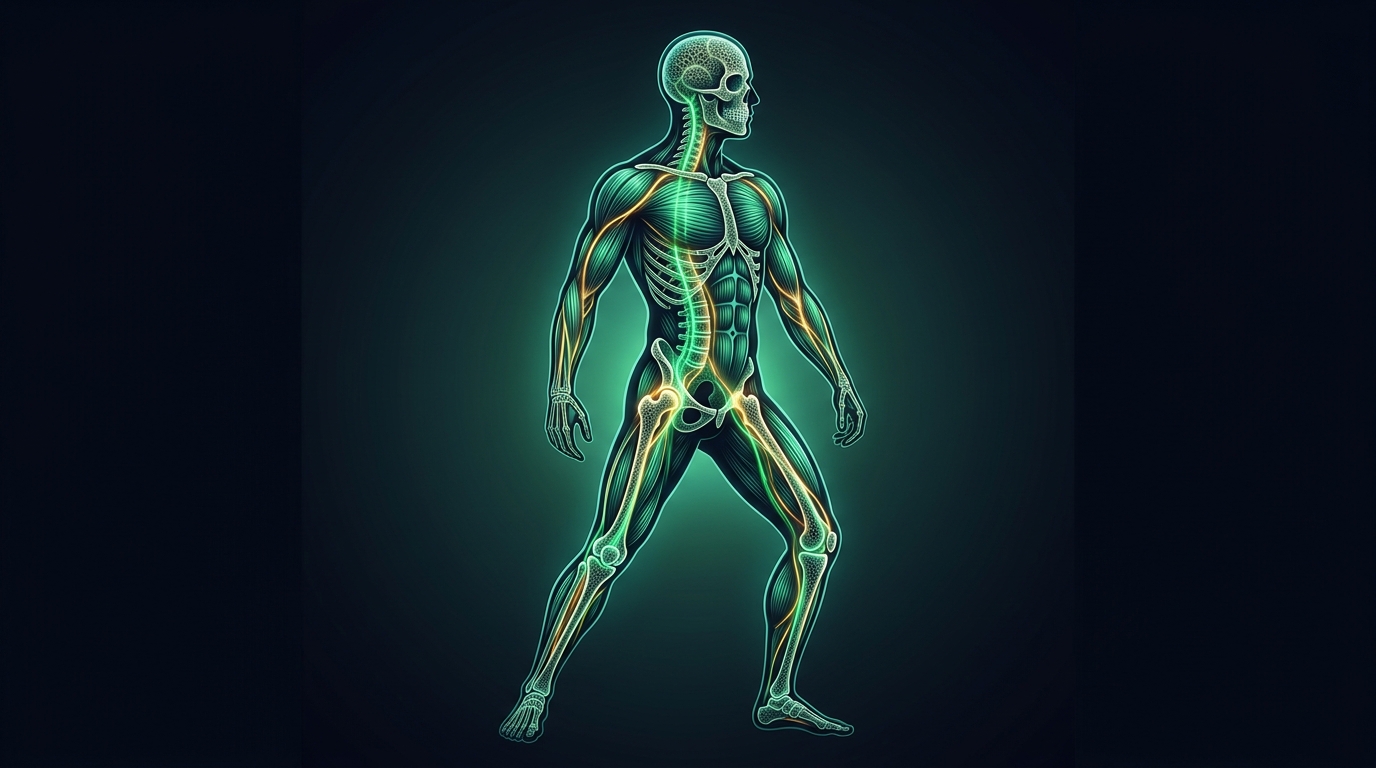
When we ask people what they fear most about growing old, the answer is rarely the date on their birth certificate.
The true, visceral fear is losing physical autonomy—the dread of being unable to stand up from a toilet unassisted, struggling to walk up a flight of stairs, slipping on a wet floor, fracturing a hip, and spending the final chapter of life confined to a wheelchair or bed, dependent on children and caregivers for the most basic human dignities.
In Medicine 3.0, we recognize a foundational reality: Your skeletal muscle and bone matrix are not aesthetic luxuries; they are your primary endocrine shields and metabolic armor.
Starting around age 30, adults silently lose 3% to 8% of muscle mass per decade, a rate that accelerates dramatically past age 60. Simultaneously, bone mineral density degrades in a quiet, symptomless cascade known as osteopenia and osteoporosis.
By the time the first fracture occurs or a simple fall leads to hospitalization, the underlying biological deficit has been compounding for thirty years.
Here is the deep physiology of sarcopenia and bone demineralization, and the actionable, science-grounded blueprint to build unbreakable musculoskeletal resilience for life.
1. The Anatomy of Decay: What Actually Happens to Aging Muscle and Bone
To prevent frailty, we must first understand why the body discards muscle and bone as we age. The human body is ruthlessly efficient; if you do not actively convince your physiology that muscle and bone are vital for survival, it dismantles them to conserve metabolic resources.
⚠️ The Downward Spiral of Musculoskeletal Frailty
- Sedentary Lifestyle & Low Leucine Intake: Motor neurons lose frequent high-threshold stimulation.
- Type II Fast-Twitch Muscle Denervation (Sarcopenia): Explosive power and emergency bracing capacity drop by up to 50%.
- Loss of Mechanotransductive Signals to Bone: Without heavy axial tension, osteoblast activity shuts down while osteoclasts hollow out bone architecture.
- Impaired Balance & Reaction Time: A routine slip leads to an inability to catch one's center of gravity.
- Fragility Hip Fracture: Results in hospitalization, prolonged bed rest, rapid muscle wasting, and loss of independence.
Sarcopenia: The Loss of Explosive Muscle Quality
Sarcopenia is not merely losing muscle size; it is a selective destruction of Type II (fast-twitch) muscle fibers.
- Type I (slow-twitch) fibers handle endurance and posture, and decline very slowly.
- Type II fibers generate power, speed, and emergency bracing. When you trip over a rug or stumble off a curb, your Type II fibers must fire within 50 milliseconds to catch your center of gravity.
- As motor neurons disconnect from neglected Type II fibers, fat and fibrous scar tissue infiltrate the muscle belly (myosteatosis). The muscle loses its contractile stiffness, turning what was once a taught spring into slack rope.
Osteoporosis: When Osteoclasts Outpace Osteoblasts
Bone is not static concrete; it is a dynamic, living tissue undergoing constant remodeling:
- Osteoclasts act as the demolition crew, excavating old, micro-damaged bone.
- Osteoblasts act as the construction crew, laying down fresh collagen matrices and mineralizing them with calcium and phosphorus crystals (hydroxyapatite).
- After peak bone mass is reached in your late 20s, osteoclast resorption begins to outpace osteoblast formation. In postmenopausal women, the abrupt drop in estradiol accelerates this loss to 2% to 3% of total bone mass per year.
2. Intuitive Analogies: Why Muscle and Bone Are Your True Wealth
Understanding the biology becomes effortless when you use the right mental models:
🏛️ The Three Musculoskeletal Analogies
- Bone Density is a High-Interest Retirement Account: You make massive mineral deposits in your 20s and 30s. In your 50s, 60s, and beyond, withdrawals are mandatory. If you enter your senior years with a massive bone bank account, normal age-related withdrawals leave you completely safe. If you retire with an empty account, a single withdrawal bankrupts you (fracture).
- Muscle Mass is Metabolic Body Armor: Skeletal muscle is your largest sink for blood glucose, absorbing over 80% of post-meal glucose. Muscle is also an active endocrine organ, pumping out anti-inflammatory signaling proteins called myokines (such as Irisin and IL-15) that protect brain synapses and boost mitochondrial fat burning.
- Mechanotransduction is the Cellular Microphone: Bone cells (osteocytes) are deaf to gentle wishes, but they listen intently to mechanical force. Heavy loading deforms the bone crystal matrix, creating microscopic piezoelectric currents and fluid shear stress. This mechanical vibration is the only signal that commands osteoblasts to reinforce the skeleton.
3. Clinical Metrics: How to Measure Your Musculoskeletal Health
Do not wait for a catastrophic fracture or a noticeable loss of height to assess your structural reserve. The Medicine 3.0 diagnostic protocol tracks:
| Biomarker / Test | What It Measures | Optimal Longevity Benchmark |
|---|---|---|
| DEXA Bone Mineral Density (T-Score) | Bone density at femoral neck, hip, and lumbar spine | T-Score > -1.0 (Normal BMD; avoid < -2.5) |
| Appendicular Lean Mass Index (ALMI) | Muscle mass of arms and legs adjusted for height (kg/m²) | Men > 7.26 kg/m² | Women > 5.5 kg/m² |
| Grip Strength Dynamometer | Global neuromuscular recruitment and central nervous output | Men > 45 kg | Women > 30 kg |
| 5-Times Sit-to-Stand Test | Lower-body power and dynamic hip extension velocity | < 8.5 seconds without using arm support |
| Serum 25-Hydroxyvitamin D3 | Hormonal baseline for intestinal calcium absorption | 45 – 65 ng/mL (112 – 162 nmol/L) |
4. The 4-Pillar Actionable Protocol to Prevent Sarcopenia & Osteoporosis
To build an unyielding physical chassis that guarantees self-reliance into your 80s and 90s, implement these four evidence-based pillars:
| Pillar | Core Action | Biological Mechanism | Target Dose |
|---|---|---|---|
| 1. Heavy Axial Resistance | Squats, Deadlifts, Farmer's Walks, Overhead Press | Compresses axial skeleton; triggers mechanotransductive osteogenesis and Type II hypertrophy | 2–3 sessions/week (75–85% 1RM, 6–10 reps) |
| 2. Dynamic Impact Loading | Vertical hops, heel drops, lateral bounds | Generates high-rate strain waves across femoral neck cortical bone | 20–30 daily impacts |
| 3. Leucine Threshold Nutrition | High-quality complete protein boluses | Surpasses anabolic resistance to activate the mTORC1 muscle protein synthesis switch | 1.6–2.2 g/kg/day (≥ 3.0g Leucine/meal) |
| 4. Micronutrient Synergy | Vitamin D3 + K2 (MK-7) + Magnesium + Food Calcium | Directs circulating calcium into bone crystals while protecting arterial walls from calcification | D3: 2000–5000 IU, K2: 100–200 mcg, Mg: 300–400 mg |
Pillar 1: Progressive Heavy Resistance Training (Axial Loading)
Light pink dumbbells and gentle water aerobics are insufficient to stimulate osteoblast remodeling or recruit Type II muscle motor units. You require axial compressive load:
- The Core Functional Compounds (2–3 times per week):
- The Hip Hinge (Deadlift / Trap-Bar Deadlift): Loads the posterior chain, femoral neck, and lumbar vertebrae—the primary sites of fatal fragility fractures.
- The Squat (Goblet Squat or Barbell Box Squat): Preserves quad power and knee joint integrity, ensuring lifelong ability to get up from chairs and ground surfaces.
- The Loaded Carry (Farmer's Walk): Carry 50–75% of your body weight in two dumbbells for 60 seconds. Reinforces grip strength, core stability, and bone density across the pelvis.
- The Overhead Press: Drives bone mineral accretion in the clavicles, shoulders, and upper thoracic spine.
- Intensity Zone: Work in the 6 to 10 repetition range at an intensity where you finish each set with 1–2 repetitions in reserve (RIR 1–2, approx. 75–85% of 1-Repetition Max).
Pillar 2: Dynamic Multi-Directional Impact Loading
Bone responds disproportionately to the rate of strain (speed of force impact) rather than static pressure:
- The "Stomp & Hop" Routine: If joints permit, perform 20 to 30 vertical hops, jump rope intervals, or deliberate heel drops daily.
- Multi-Planar Agility: Lateral side-shuffles and backward walking challenge the femoral neck from non-habitual angles, thickening the cortical bone shell where typical falls cause breaks.
Pillar 3: Overcoming Anabolic Resistance with the Leucine Threshold
As we pass age 40, our muscle tissue develops anabolic resistance—meaning a standard small dose of protein (10–15g) no longer flips the biological switch for Muscle Protein Synthesis (MPS) via the mTORC1 pathway.
- Total Daily Target: Consume 1.6 to 2.2 grams of protein per kilogram of body weight (e.g., a 70 kg individual requires 110–150g of daily protein).
- The Leucine Trigger: Each meal must deliver at least 3.0 grams of the essential amino acid Leucine (found in 35–40g of high-quality whey, eggs, beef, salmon, or fortified plant protein). Spacing protein into 3 to 4 distinct boluses per day keeps MPS active throughout the 24-hour cycle.
Pillar 4: The Bone Mineralization Synergy Matrix
Calcium alone is useless—and can even calcify coronary arteries if not guided by its synergistic co-factors:
- Vitamin D3 (2,000 – 5,000 IU/day): Increases active intestinal absorption of dietary calcium by over 300%.
- Vitamin K2 (as MK-7, 100 – 200 mcg/day): Activates Osteocalcin, the biological glue that binds circulating calcium into the bone lattice, while activating Matrix Gla Protein (MGP) to keep calcium out of arterial walls.
- Magnesium Glycinate or Malate (300 – 400 mg/day): Essential enzymatic co-factor to convert Vitamin D into its active hormonal form.
- Dietary Calcium (1,000 – 1,200 mg/day): Prioritize whole food sources: organic dairy, canned sardines with soft edible bones, dark leafy greens, and sesame paste (tahini).
5. Summary Blueprint: The Weekly Anti-Sarcopenia Schedule
| Day | Primary Focus | Exercise Protocol & Dose |
|---|---|---|
| Monday | Heavy Lower Body & Bone Compression | Goblet/Barbell Squats (4x8), Romanian Deadlifts (3x8), Calf Raises (3x15) |
| Tuesday | Zone 2 Aerobic & Impact Stomps | 45 min brisk incline walk + 20 gentle bounding jumps |
| Wednesday | Upper Body Strength & Grip Reserve | Overhead Dumbbell Press (3x8), Chest-Supported Rows (3x10), Dead Hang (3 sets to near failure) |
| Thursday | Zone 2 Cardio & Core Stability | 45 min stationary cycling + Single-leg balance drill (10 min) |
| Friday | Full-Body Power & Axial Loading | Trap-Bar Deadlifts (4x6), Push-ups (3xMax), Farmer's Walk (4x50m heavy carry) |
| Saturday | Outdoor Multi-Planar Movement | Rucking with 10–15kg backpack on natural terrain, trail hiking |
| Sunday | Active Recovery & Joint Decompression | Light walking, stretching, sauna, high-protein family feast |
Key Takeaways: Actionable Longevity Blueprint
- 💡 Muscle and bone are not optional: Sarcopenia and osteoporosis are silent decay processes that start in your 30s. Entering old age with high muscle mass and dense bones is the single most reliable predictor of living independently into your 90s without needing assisted living.
- 💡 Heavy weights are Medicine: Light walking is fantastic for metabolic health, but it cannot stop bone loss. Your skeleton requires axial mechanical load (squats, deadlifts, loaded carries) to trigger piezoelectric bone formation through mechanotransduction.
- 💡 Hit the Leucine Threshold: To beat aging muscle's "anabolic resistance," every main meal must contain 30–40g of protein providing at least 3g of Leucine to activate the mTOR protein synthesis switch.
- 💡 Pair Vitamin D3 with K2 and Magnesium: Calcium cannot build bone on its own. Vitamin D3 absorbs it, Magnesium activates it, and Vitamin K2 (MK-7) directs it away from arteries and locks it securely into the bone matrix.
Recommended Reading
To master the biomechanics, clinical science, and nutrition strategies for musculoskeletal longevity, read these essential books:
- Forever Strong: A New, Science-Based Strategy for Aging Well by Dr. Gabrielle Lyon
The authoritative guide to Muscle-Centric Medicine, explaining why optimizing dietary protein and skeletal muscle mass is the master key to metabolic vitality and preventing age-related decline. - Outlive: The Science and Art of Longevity by Dr. Peter Attia, M.D.
The landmark manifesto detailing the Centenarian Decathlon, why grip strength and leg power predict mortality, and how to train for physical freedom in your marginal decade. - Built to Move: The 10 Essential Habits to Help You Move Freely and Live Long by Kelly Starrett & Juliet Starrett
A practical, movement-first handbook packed with daily mobility screens, sit-to-stand tests, and dynamic structural protocols to safeguard joint longevity.
Peer-Reviewed Clinical Citations & Landmark Evidence
Sarcopenia Definition, Diagnosis, and Clinical Outcomes (EWGSOP2 Guidelines):
Cruz-Jentoft AJ, Bahat G, Bauer J, et al. "Sarcopenia: revised European consensus on definition and diagnosis." Age and Ageing, 2019 Jan 1;48(1):16-31.
🔗 PubMed PMID: 30312372 | DOI: 10.1093/ageing/afy169Systematic Review & Meta-Analysis on Protein Supplementation & Resistance Training:
Morton RW, Murphy KT, McKellar SR, et al. "A systematic review, meta-analysis and meta-regression of the effect of protein supplementation on resistance training-induced gains in muscle mass and strength in healthy adults." British Journal of Sports Medicine, 2018 Mar;52(6):376-384.
🔗 PubMed PMID: 28698222 | DOI: 10.1136/bjsports-2017-097608Mechanotransduction and Wolff's Law in Bone Remodeling:
Robling AG, Castillo AB, Turner CH. "Biomechanical and molecular regulation of bone remodeling." Annual Review of Biomedical Engineering, 2006;8:455-98.
🔗 PubMed PMID: 16834564 | DOI: 10.1146/annurev.bioeng.8.061505.110505Hip Fracture Incidence, Morbidity, and Long-Term Excess Mortality in the Elderly:
Cummings SR, Melton LJ. "Epidemiology and outcomes of osteoporotic fractures." The Lancet, 2002 May 18;359(9319):1761-7.
🔗 PubMed PMID: 12049882 | DOI: 10.1016/S0140-6736(02)08657-9Synergistic Effects of Vitamin D and Vitamin K on Bone Mineral Density and Vascular Calcification:
van Ballegooijen AJ, Pilz S, Tomaschitz A, et al. "The Synergistic Interplay between Vitamins D and K for Bone and Cardiovascular Health: A Narrative Review." International Journal of Endocrinology, 2017;2017:7454376.
🔗 PubMed PMID: 29138634 | DOI: 10.1155/2017/7454376
Actionable Longevity Checklist: Next Steps
Scientific insights have maximum power when translated into micro-habits. Check off your daily targets:
Log in Habitspan Daily Protocol (15s)
Lock your 4 biological pillars daily with zero friction and zero tedious data entry.
Calculate Your Biological Cell Age
Assess your functional longevity score against chronological birth age using Medicine 3.0 metrics.