Reversing Early Memory Loss & Mild Cognitive Impairment: The Science of Synaptic Density, Glymphatic Cleansing, and Dual-Fuel Brain Rescue
Experiencing subtle word-finding difficulty, brain fog, or memory lapses can feel terrifying. Grounded in landmark neurology trials like FINGER and the Bredesen Protocol, discover why the early window of Mild Cognitive Impairment (MCI) is fully actionable and how to rescue starved neurons before irreversible damage occurs.
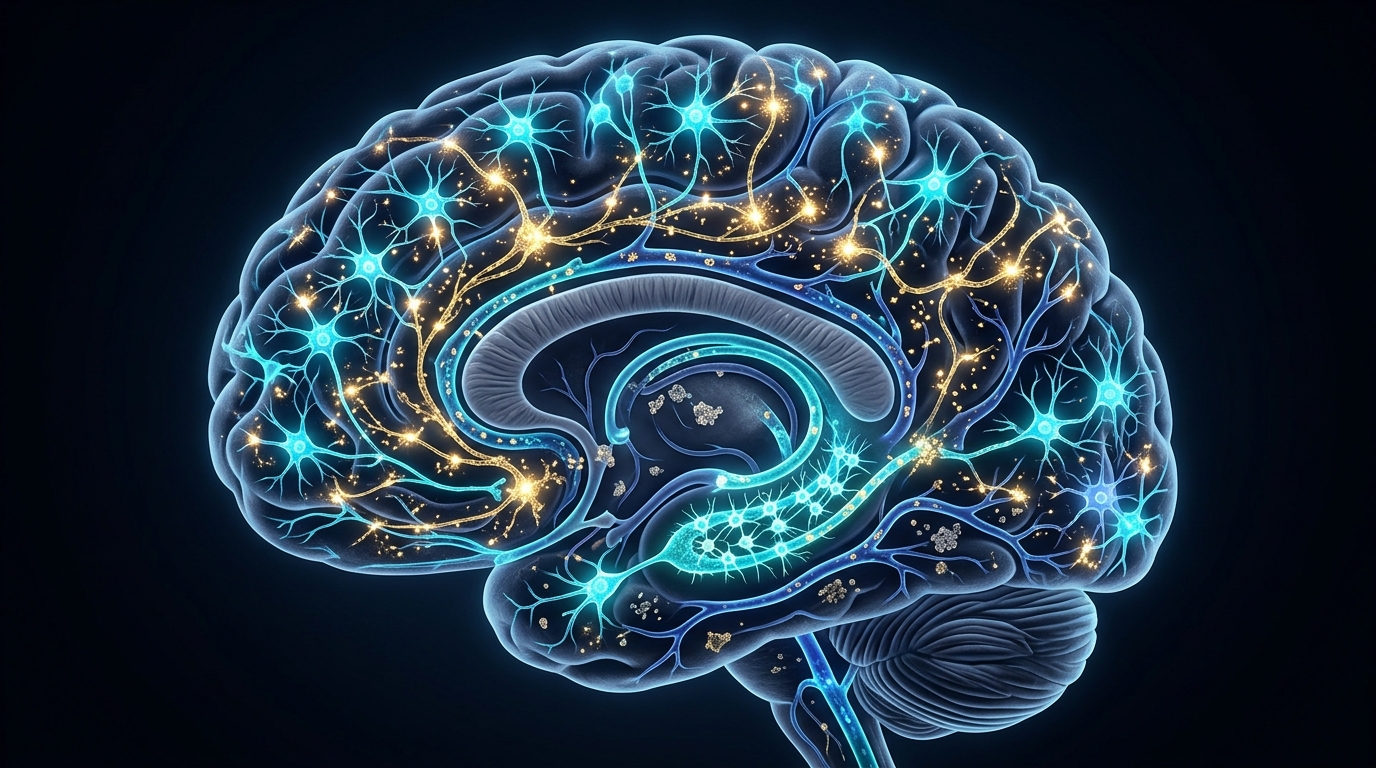
There are few experiences more unsettling than noticing the first subtle signs of cognitive decline: forgetting familiar names, losing your train of thought mid-sentence, experiencing persistent brain fog, or walking into a room and forgetting why you entered.
For decades, conventional medicine treated Mild Cognitive Impairment (MCI) with passive fatalism—labeling it as "normal aging" until symptoms crossed into irreversible Alzheimer’s dementia.
Modern neuroscience and Medicine 3.0 have completely revolutionized this paradigm.
Landmark international studies—such as the landmark FINGER Trial (published in The Lancet) and Dr. Dale Bredesen's clinical research at UCLA—have proven that the brain possesses extraordinary lifelong neuroplasticity.
During the early stages of Subjective Cognitive Decline (SCD) and MCI, neurons have not yet died; they are merely bioenergetically starved, inflamed, and suffering from synaptic disconnection. By deploying a multi-domain neuroprotective strategy, early cognitive decline can be halted and meaningfully reversed.
1. The Real Biology of Early Memory Loss
Why do brain circuits begin to falter in midlife? Cognitive impairment is rarely caused by a single defect; it is the culmination of three compounding biochemical insults:
🧠 The 3 Biological Drivers of Early Neurodegeneration
- Cerebral Hypometabolism (Type 3 Diabetes): When brain microvasculature becomes insulin resistant, GLUT1/GLUT4 transporters cannot efficiently shuttle glucose into neurons. The hippocampus enters a state of chronic cellular energy starvation, causing synaptic signaling to drop.
- Glymphatic Clearance Breakdown: The brain lacks a traditional lymphatic system. Instead, it relies on the Glymphatic System—a specialized astroglial network that expands during deep Stage 3 NREM sleep to flush out neurotoxic Beta-Amyloid plaques (toxic brain protein debris) and tangled Tau proteins. Chronic sleep disruption stops this nightly brain detox.
- Elevated Homocysteine & Microvascular Ischemia: Homocysteine levels above damage cerebral microcapillaries, impairing methylation pathways and causing microvascular white matter rarefaction.
2. The FINGER Trial Evidence: Multidomain Brain Rejuvenation
The Finnish Geriatric Intervention Study to Prevent Cognitive Impairment and Disability (FINGER Trial) followed over 1,200 individuals with early cognitive vulnerability:
- Participants engaged in a simultaneous 4-domain protocol: aerobic/resistance exercise, brain-specific Mediterranean nutrition, cognitive training, and vascular risk management.
- The intervention group demonstrated a 25% to 30% improvement in overall cognitive performance, with processing speed improving by 150% and executive function scores jumping by 83%.
- MRI volumetry confirmed the preservation of hippocampal volume and prefrontal cortex cortical thickness, proving anatomical neuroprotection.
3. The 4-Pillar Neuroprotective Protocol
Pillar 1: Fuel — The Dual-Fuel Brain Rescue Strategy
- Overcoming Glucose Starvation with Ketone Bodies: When neurons are resistant to insulin, they cannot burn glucose—but their ability to absorb and burn Ketone Bodies (Beta-hydroxybutyrate) remains 100% intact. Practicing 14:10 to 16:8 circadian fasting or supplementing with C8 Caprylic Acid MCT oil provides an immediate alternative rocket fuel that restores hippocampal ATP generation.
- Brain-Derived Neurotrophic Lipids (High-DHA Omega-3): DHA constitutes 50% of the neuronal membrane phospholipid bilayer. 1,000–2,000 mg of pure DHA daily enhances membrane fluidity and accelerates synaptic vesicle docking.
- Methylation Optimization (Active Folate & Methyl-B12): Keeps serum homocysteine below , preventing neurovascular endothelial damage.
Pillar 2: Sleep — Activating the Glymphatic Brain Wash
- Prioritize 60–90 Minutes of Deep Stage 3 Sleep: During slow-wave deep sleep, brain interstitial space expands by 60%, allowing cerebrospinal fluid (CSF) to surge through Aquaporin-4 (AQP4) water channels, washing away toxic beta-amyloid debris before it hardens into permanent brain plaques.
- Cool Sleeping Environment ($18\text{ }^\circ\text{C} / 65\text{ }^\circ\text{F}$): A cool core body temperature facilitates rapid entry into restorative delta-wave sleep.
Pillar 3: Movement — Supercharging BDNF & Synaptogenesis
- Zone 2 Aerobic Exercise (150–180 Mins/Week): Sustained aerobic exertion triggers muscle cells to secrete Irisin, which crosses the blood-brain barrier and triggers massive synthesis of Brain-Derived Neurotrophic Factor (BDNF) in the hippocampus—stimulating actual adult neurogenesis (new brain cell birth).
- High-Load Resistance & Balance Training: Heavy compound movements (squats, deadlifts, single-leg balancing) stimulate the vestibular-cerebellar-frontal network, preserving white matter integrity.
Pillar 4: Mind & Cognitive Reserve — Cross-Training Neuroplasticity
- Learn Novel, Frustrating Skills: Passively scrolling or repeating familiar tasks does not build new synapses. True neuroplasticity requires cognitive friction—learning a foreign language, playing a musical instrument, or mastering complex movement patterns (e.g., dancing or martial arts).
- Mastering Deep Reading: Replace fragmented digital screens with 30–45 minutes of sustained, contemplative deep reading of dense literature each day to rebuild prefrontal attentional circuits.
4. Medicine 3.0 Cognitive Longevity Biomarkers
Track these functional neuro-metabolic markers every 6 months to safeguard your brain health:
| Biomarker | Subclinical Risk Level | Medicine 3.0 Optimal Brain Target | Clinical Neuroprotective Impact |
|---|---|---|---|
| Homocysteine | Protects cerebral microvessels and methylation | ||
| Fasting Insulin | Eliminates cerebral insulin resistance (Type 3 Diabetes) | ||
| hs-CRP (Inflammation) | Prevents neuro-inflammatory blood-brain barrier leakage | ||
| Serum Vitamin B12 | Preserves axonal myelin sheath insulation | ||
| Serum 25(OH) Vitamin D | Up-regulates neurotrophin receptors and clears plaques | ||
| HbA1c | Prevents microvascular glycation in the hippocampus |
5. Peer-Reviewed Clinical Citations & Landmark Evidence
Glymphatic Clearance of Amyloid-Beta in Deep Sleep:
Xie L, Kang H, Xu Q, et al. (Nedergaard Lab). "Sleep Drives Metabolite Clearance from the Adult Brain." Science, 2013 Oct 18;342(6156):373-7.
🔗 PubMed PMID: 24136964 | DOI: 10.1126/science.1241224The FINGER Multidomain Lifestyle Intervention Trial:
Ngandu T, Lehtisalo J, Solomon A, Kivipelto M, et al. "A 2 year multidomain intervention of diet, exercise, cognitive training, and vascular risk monitoring versus control to prevent cognitive decline in at-risk elderly people (FINGER): a randomised controlled trial." The Lancet, 2015 Jun 6;385(9984):2255-63.
🔗 PubMed PMID: 25771249 | DOI: 10.1016/S0140-6736(15)60461-5Cerebral Insulin Resistance & Alzheimer's (Type 3 Diabetes):
de la Monte SM, Wands JR. "Alzheimer's Disease Is Type 3 Diabetes—Evidence Reviewed." Journal of Diabetes Science and Technology, 2008 Nov;2(6):1101-13.
🔗 PubMed PMID: 19885299Exercise, Irisin & Hippocampal BDNF Neurogenesis:
Wrann CD, White JP, Spiegelman BM, et al. "Exercise induces hippocampal BDNF through a PGC-1α/FNDC5/irisin-dependent pathway." Cell Metabolism, 2013 Nov 5;18(5):649-59.
🔗 PubMed PMID: 24120942 | DOI: 10.1016/j.cmet.2013.10.008Aerobic Exercise Increases Hippocampus Size in Aging Humans:
Erickson KI, Voss MW, Kramer AF, et al. "Exercise training increases size of hippocampus and improves memory." PNAS (Proceedings of the National Academy of Sciences), 2011 Feb 15;108(7):3017-22.
🔗 PubMed PMID: 21282661 | DOI: 10.1073/pnas.1015950108
Recommended Reading
To master the neuroscience of neuroplasticity, memory preservation, and mental sovereignty, we recommend these foundational texts:
Dr. Peter Attia's Outlive: The Science and Art of Longevity
Offers a masterclass on Alzheimer’s disease genetics (APOE genotype), the neurobiology of Type 3 Diabetes, and how exercise serves as the most potent neuroprotective drug in existence.
👉 Get Outlive on AmazonDr. Matthew Walker's Why We Sleep: Unlocking the Power of Sleep and Dreams
Essential reading to understand the Glymphatic System, how slow-wave deep sleep washes away toxic Alzheimer's proteins, and why sleep is non-negotiable for cognitive longevity.
👉 Get Why We Sleep on AmazonMarcus Aurelius's Meditations
Cognitive resilience requires psychological clarity. Discover the timeless Stoic mental models for conquering catastrophic anxiety, accepting reality, and maintaining focus in a distracting world.
👉 Get Meditations on Amazon
Actionable Longevity Checklist: Next Steps
Scientific insights have maximum power when translated into micro-habits. Check off your daily targets:
Log in Habitspan Daily Protocol (15s)
Lock your 4 biological pillars daily with zero friction and zero tedious data entry.
Calculate Your Biological Cell Age
Assess your functional longevity score against chronological birth age using Medicine 3.0 metrics.