Circadian Habits: The Biohacking Foundation
How aligning your daily routines with biological clocks cures persistent fatigue.
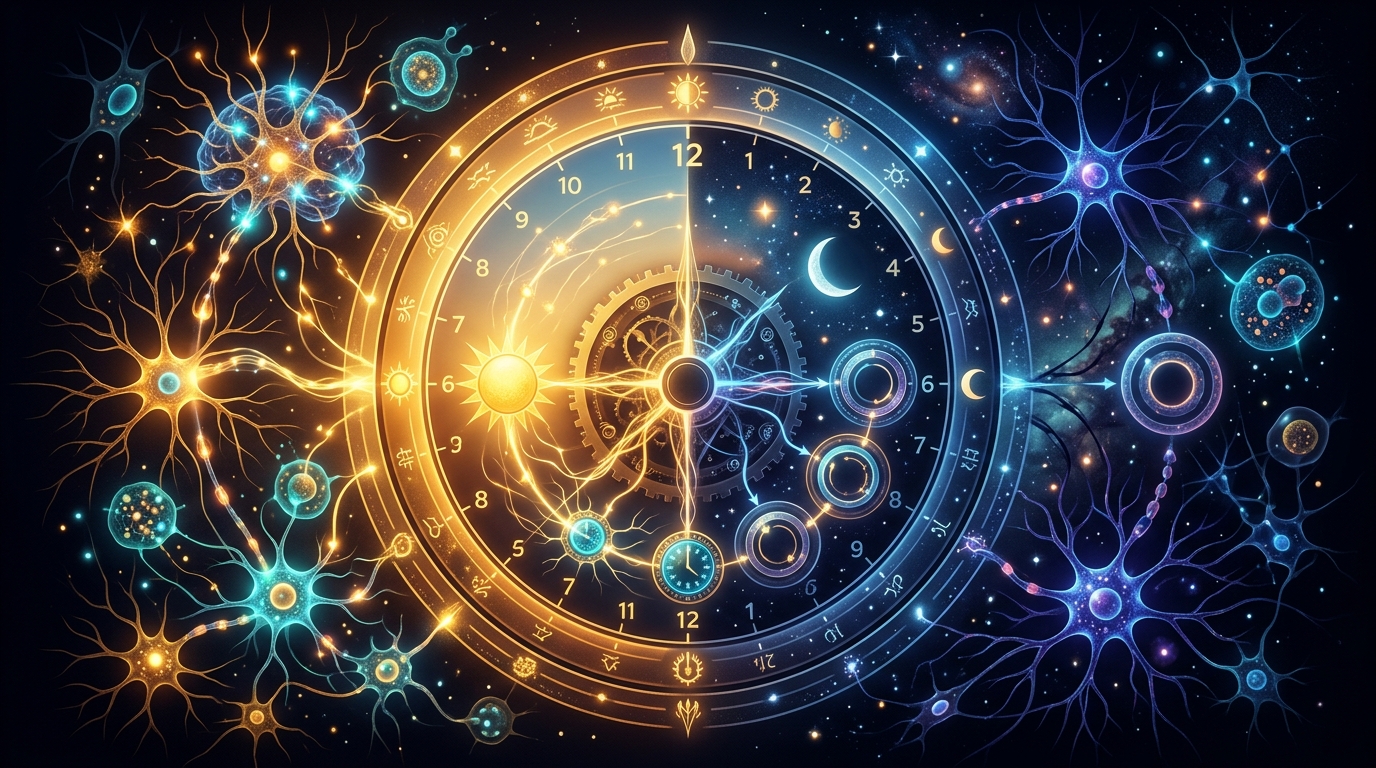
Why do some habits feel effortless to stick to, while others require monumental willpower?
According to neurological sciences, habits are not formed by sheer determination. They are regulated by neurological loops and biological timers. If you try to force a deep, complex coding habit at 9:00 PM when your brain is preparing for sleep, you are fighting your own biology.
By aligning your habit loops with your circadian rhythm—the internal 24-hour biological clock—you can automate consistency.
1. The Neurological Habit Loop
Every habit is a four-step loop that shapes human behavior:
- Cue: The trigger that makes your brain start a behavior (e.g. your phone alarm goes off).
- Craving: The motivational force behind the habit (e.g. wanting to feel alert).
- Response: The actual action or routine you perform (e.g. drinking a glass of water).
- Reward: The end goal of the habit, which reinforces the loop (e.g. feeling hydrated and fresh).
If you want to build a new habit, design a clear Cue and frictionless Response. If you want to drink water first thing in the morning, place a filled glass on your nightstand the night before.
2. Syncing Habits with Circadian Rhythms
Your body has natural hormone cycles:
- Cortisol & Light (Morning): Your cortisol spike occurs 30-45 minutes after waking. Seek 10-15 minutes of outdoor sunlight. This locks in your circadian timer and regulates evening melatonin release.
- Focus Peaks (Mid-day): High cognitive performance peak occurs 2-4 hours after waking. This is when you should schedule your "Deep Work" productivity blocks.
- Melatonin Release (Evening): As daylight fades, melatonin rises. Dim artificial screens and stop consuming caffeine at least 10 hours before sleep.
3. Tracking streaks and trends
Willpower is finite. By using a visual tracker to record your daily wins, you trigger small dopamine rewards that solidify the habit loop. The key is to track consistency streaks: "Never miss twice." If you miss one day, make it an absolute priority to hit the next.
Design Your System
Automate your wellness by creating a structured routine planner. Set up triggers and record your habits daily using a clean, interactive Habit Planner to keep you accountable.
Peer-Reviewed Scientific Citations & Landmark Evidence
Habits, Basal Ganglia Neural Loops, and the Evaluative Brain:
Graybiel AM. "Habits, rituals, and the evaluative brain." Annual Review of Neuroscience, 2008;31:359-87.
🔗 PubMed PMID: 18558860 | DOI: 10.1146/annurev.neuro.29.051605.112851Dopamine Reward Prediction Errors in Habit Reinforcement:
Schultz W. "Neuronal reward and decision signals: from theories to data." Physiological Reviews, 2015 Jul;95(3):853-951.
🔗 PubMed PMID: 26109341 | DOI: 10.1152/physrev.00023.2014Circadian Phototransduction via Intrinsically Photosensitive Retinal Ganglion Cells:
Hattar S, Liao HW, Takao M, Berson DM, Yau KW. "Melanopsin-containing retinal ganglion cells: architecture, projections, and intrinsic photosensitivity." Science, 2002 Feb 8;295(5557):1065-70.
🔗 PubMed PMID: 11834834 | DOI: 10.1126/science.1069609The Awakening Cortisol Response and Circadian Entrainment:
Clow A, Thorn L, Evans P, Hucklebridge F. "The awakening cortisol response: methodological issues and significance." Stress, 2004 Mar;7(1):29-37.
🔗 PubMed PMID: 15204030 | DOI: 10.1080/10253890410001667205
Recommended Reading
- Atomic Habits by James Clear — The definitive framework for engineering automatic habits through cue-craving-response-reward loops that compound into extraordinary long-term results.
- The Circadian Code by Satchin Panda, Ph.D. — A pioneering neuroscientist reveals how aligning eating, exercise, and sleep with your biological clock dramatically improves energy and longevity.
- Why We Sleep by Matthew Walker, Ph.D. — A comprehensive guide to the science of circadian rhythms and why sleep is the most powerful performance-enhancing tool available.
Actionable Longevity Checklist: Next Steps
Scientific insights have maximum power when translated into micro-habits. Check off your daily targets:
Log in Habitspan Daily Protocol (15s)
Lock your 4 biological pillars daily with zero friction and zero tedious data entry.
Calculate Your Biological Cell Age
Assess your functional longevity score against chronological birth age using Medicine 3.0 metrics.