The Gut-Brain Axis: How Microbiome Dysbiosis, Zonulin, and Short-Chain Fatty Acids Dictate Mental Clarity, Neuroinflammation, and Longevity
Your gastrointestinal tract is not just a digestive tube; it is your second brain. Discover the biochemistry of the gut-brain axis, how zonulin triggers systemic endotoxemia, and the precise nutritional protocol to cultivate an age-defying microbiome.
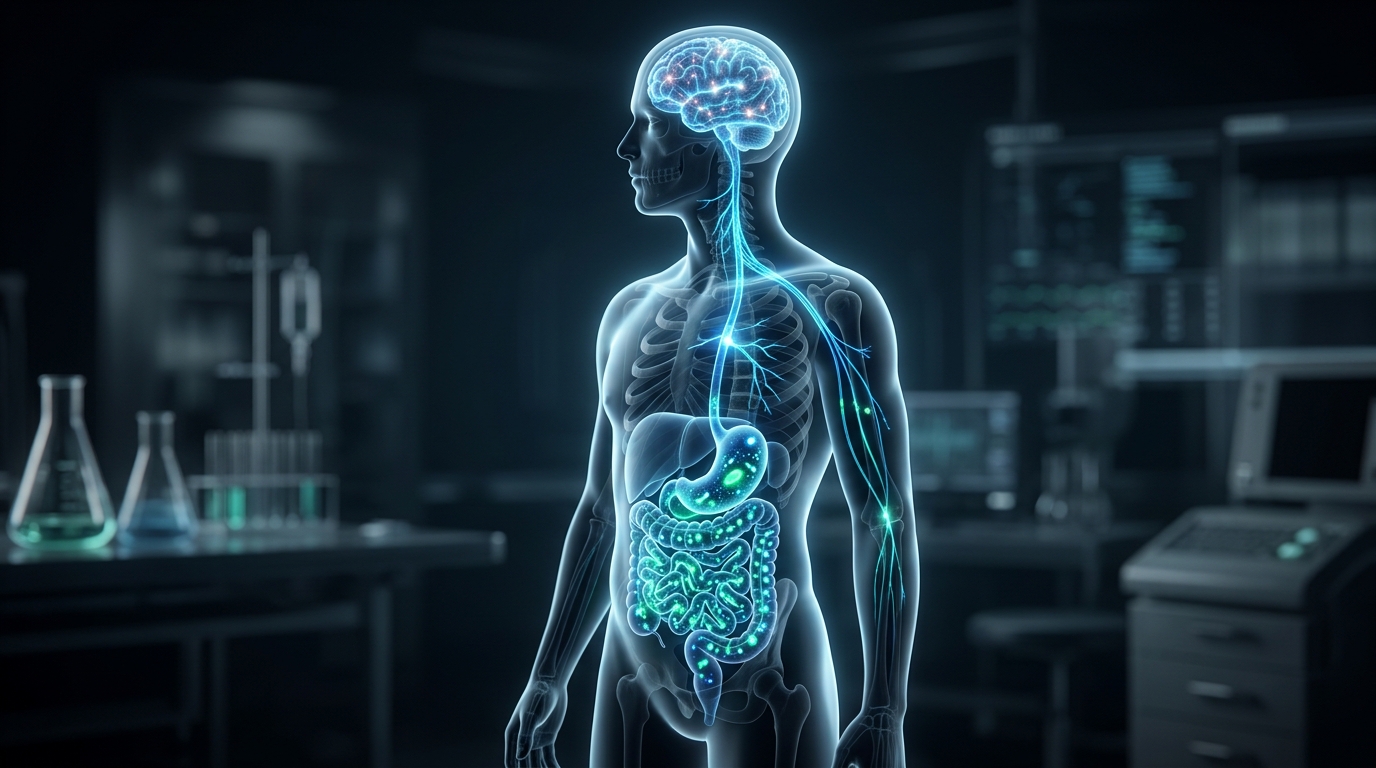
Deep within the lumen of your gastrointestinal tract lives an ecosystem so vast and metabolically active that modern medicine now classifies it as a virtual endocrine organ: the human gut microbiome.
Comprising over 100 trillion microorganisms and encoding more than 3.3 million unique genes—150 times more genetic material than the entire human genome—these microscopic residents synthesize essential neurotransmitters, train your immune system, harvest energy, and maintain the integrity of your vascular barriers.
When this ecosystem is diverse, rich in obligate anaerobes, and fed fermentable dietary fiber, it acts as a fortress of physiological resilience.
However, in the industrialized world, chronic consumption of ultra-processed emulsifiers, unnecessary broad-spectrum antibiotic courses, artificial sweeteners, and chronic psychological stress have triggered an epidemic of Intestinal Dysbiosis.
The devastating downstream consequence is Intestinal Permeability ("Leaky Gut"):
- Tight junction proteins dissolve under the influence of zonulin.
- Bacterial bacterial toxins called Lipopolysaccharides (LPS) spill across the fragile single-cell epithelial wall into systemic circulation.
- Circulating endotoxins cross the blood-brain barrier via the Vagus Nerve and humoral pathways, sparking relentless neuroinflammation, chronic brain fog, refractory anxiety, and accelerating the neurodegenerative cascade toward Alzheimer's and Parkinson's disease.
In Medicine 3.0, healing the gut-brain axis is recognized as the non-negotiable gateway to lifelong mental clarity and systemic healthspan.
1. The Anatomy of the Gut-Brain Highway
The communication between your digestive tract and your central nervous system is bidirectional, operating across three primary superhighways:
The Gut-Brain Trifecta
The Bidirectional Communication Superhighways between the CNS and the Enteric Nervous System
The Vagus Nerve
A physical high-speed cable where 80% of fibers send sensory data (inflammation, satiety) upwards from the gut to the brain in milliseconds.
Neurotransmitters & SCFAs
Microbes synthesize mood-regulating molecules and Short-Chain Fatty Acids (SCFAs) like butyrate, which maintain the Blood-Brain Barrier (BBB).
GALT & Cytokines
When the gut leaks (high Zonulin), LPS toxins enter the bloodstream, triggering systemic inflammation that readily crosses into the brain.
1. The Neural Superhighway: The Vagus Nerve (Cranial Nerve X)
The vagus nerve is the physical cable connecting the brainstem directly to the enteric nervous system (ENS). Crucially, over 80% of vagal fibers are afferent—meaning they send sensory information from the gut upward to the brain, rather than the brain dictating orders downward. When the gut is inflamed, your brain receives continuous, sub-perceptual danger signals.
2. The Biochemical Superhighway: Microbial Neurotransmitters
Your gut bacteria are biochemical factories that synthesize the identical chemical messengers your brain uses to regulate mood, focus, and circadian sleep:
- Serotonin: Approximately 90% of the body's total serotonin is synthesized in the gut by enterochromaffin cells, heavily regulated by bacterial metabolites.
- GABA (Gamma-Aminobutyric Acid): Strains of Bifidobacterium and Lactobacillus actively produce GABA, the brain's primary inhibitory, calming neurotransmitter.
- Dopamine & Acetylcholine: Produced by commensal species to regulate gut motility and emotional drive.
3. The Immune Highway: GALT and Systemic Cytokines
Over 70% of your entire immune system resides in the Gut-Associated Lymphoid Tissue (GALT), separated from the toxic fecal stream by a mucosal epithelial layer just a single cell thick (20 microns). When that barrier is breached, the immune system launches a whole-body inflammatory assault.
2. Zonulin, Tight Junction Breakdown, and Metabolic Endotoxemia
To understand how gut dysfunction causes systemic decay, one must understand the gatekeepers of the intestinal barrier: Tight Junctions (Claudins and Occludins).
In 2000, world-renowned pediatric gastroenterologist Dr. Alessio Fasano discovered Zonulin—the only known physiological modulator that opens the tight junctions between intestinal cells.
The Two Triggers of Pathological Zonulin Release
In a healthy gut, zonulin remains tightly regulated. However, two modern environmental triggers cause uncontrolled, massive zonulin secretion:
- Gliadin (Wheat Gluten): Even in individuals without celiac disease, gliadin peptides bind to CXCR3 chemokine receptors on intestinal enterocytes, triggering immediate zonulin upregulation and transient barrier opening.
- Gram-Negative Bacterial Overgrowth (Dysbiosis): When opportunistic bacteria overwhelm beneficial commensals, their bacterial cell walls shed Lipopolysaccharides (LPS), triggering aggressive zonulin surges.
The Downstream Cascade: From Leaky Gut to Leaky Brain
When tight junctions disassemble, intact food macromolecules, environmental toxins, and LPS enter the lamina propria and bloodstream:
- Toll-Like Receptor 4 (TLR4) Activation: Immune cells detect circulating LPS and fire inflammatory cytokines (TNF-alpha, IL-6, IL-1beta).
- Blood-Brain Barrier Degradation: Circulating cytokines weaken the tight junctions of the blood-brain barrier (BBB).
- Microglial Activation: In the brain, specialized immune cells called microglia shift from resting "caretaker" mode into violent "inflammatory" mode, pruning healthy synapses, suppressing neuroplasticity, and manifesting subjectively as chronic brain fog, lethargy, and executive burnout.
3. Short-Chain Fatty Acids (SCFAs): The Molecular Longevity Elixir
While dysbiosis generates toxic LPS, a thriving, fiber-fed microbiome produces the ultimate longevity shield: Short-Chain Fatty Acids (SCFAs).
When you consume non-digestible prebiotic fibers and resistant starches, human enzymes cannot break them down. They reach the colon intact, where obligate anaerobic species (Faecalibacterium prausnitzii, Akkermansia muciniphila, Roseburia) ferment them into three vital SCFAs:
| Short-Chain Fatty Acid | Typical Ratio | Key Physiological & Longevity Mechanisms |
|---|---|---|
| Butyrate (C4) | ~15% | The King of Colon Health. Serves as the primary fuel source for colonocytes (providing 70% of their energy). Potent HDAC (histone deacetylase) inhibitor that upregulates anti-inflammatory genes and induces mitochondrial biogenesis. |
| Propionate (C3) | ~25% | Absorbed into the portal vein; travels to the liver where it inhibits hepatic cholesterol synthesis, regulates gluconeogenesis, and induces satiety signals via GLP-1 and PYY. |
| Acetate (C2) | ~60% | Crosses into peripheral circulation and crosses the blood-brain barrier to directly activate hypothalamic appetite suppression and nourish systemic peripheral tissues. |
The Power of Butyrate as an Epigenetic Switch
Beyond feeding the gut wall, Butyrate acts as an epigenetic master-switch:
- By inhibiting histone deacetylase (HDAC), butyrate allows chromatin to open up, selectively promoting the transcription of Foxp3, which drives the differentiation of naive T cells into anti-inflammatory Regulatory T cells (Tregs).
- Butyrate stimulates the production of MUC2 mucin, thickening the protective mucus barrier that prevents pathogenic bacteria from ever contacting the epithelial wall.
4. The 4-Step Clinical Microbiome Restoration Protocol
In Medicine 3.0, rebuilding an age-defying gut ecosystem does not require random over-the-counter probiotic pills containing dead bacteria. It requires a systematic Re-seeding, Feeding, and Sealing Protocol:
Step 1: Maximize Plant Diversity (The "30-Plant Rule")
Research from the American Gut Project (the largest human microbiome study to date led by Dr. Rob Knight) revealed a striking correlation:
- Individuals who consume 30 or more unique plant varieties per week harbor significantly more diverse microbiomes, higher SCFA production, and fewer antibiotic-resistant microbial genes than those who eat fewer than 10 plant types.
- Protocol: Count your weekly colors and plant fibers: leafy greens, cruciferous vegetables, legumes, alliums (garlic, leeks, onions), berries, herbs, spices, nuts, and seeds.
Step 2: Cultivate Akkermansia muciniphila with Polyphenols
Akkermansia muciniphila is a keystone longevity bacterium that accounts for 1–4% of a healthy colon. It physically grazes on the outer mucus layer, stimulating colonocytes to constantly produce fresh, thick mucus. High levels of Akkermansia correlate with lean body mass, glucose regulation, and cancer immunotherapy responsiveness.
- Feeding Protocol: Akkermansia thrives on polyphenol-rich deep red and purple foods:
- Pomegranate (rich in ellagitannins, converted to longevity molecule Urolithin A)
- Wild blueberries and blackberries (anthocyanins)
- Organic extra virgin olive oil (oleuropein)
- Ceremonial-grade green tea (EGCG)
Step 3: Introduce Live Fermented Foods Daily
Instead of single-strain capsules that fail to colonize the colon, consume live fermented foods that deliver diverse, acid-resistant strains along with their postbiotic metabolites:
- 2 to 3 servings daily of unpasteurized sauerkraut, kimchi, full-fat kefir, natto, or miso.
- A landmark Stanford clinical trial by Dr. Christopher Gardner and Dr. Justin Sonnenburg (Cell, 2021) proved that a 10-week fermented food diet produced an increase in overall microbial diversity and a widespread decrease in 19 inflammatory cytokines, including IL-6.
Step 4: Eliminate Epithelial Barrier Corrosives
- Dietary Emulsifiers: Avoid polysorbate-80, carboxymethylcellulose, and carrageenan. These industrial additives act like dish soap on the gut mucus layer, dissolving the barrier and allowing bacteria to directly contact and inflame colon cells.
- Unfiltered Chlorinated Tap Water: Use multi-stage water filtration to remove chlorine, which is intentionally added to municipal water to kill bacteria, but indiscriminately alters human gut microflora.
- NSAIDs & Alcohol: Chronic ibuprofen or aspirin use directly disrupts mucosal prostaglandin synthesis, creating microscopic gastrointestinal ulcers and barrier porosity within hours of ingestion.
Clinical Research & Evidence Citations
- Fasano, A. (2012). Zonulin, regulation of tight junctions, and autoimmune diseases. Annals of the New York Academy of Sciences, 1258(1), 25–33. PubMed PMID: 22731712 | DOI: 10.1111/j.1749-6632.2012.06538.x
- Cryan, J. F., et al. (2019). The Microbiota-Gut-Brain Axis. Physiological Reviews, 99(4), 1877–2013. PubMed PMID: 31460800 | DOI: 10.1152/physrev.00018.2018
- McDonald, D., et al. / American Gut Consortium. (2018). American Gut: an Open Platform for Citizen Science Microbiome Research. mSystems, 3(3), e00031-18. PubMed PMID: 29795809 | DOI: 10.1128/mSystems.00031-18
- Wastyk, H. C., et al. (2021). Gut-microbiota-targeted diets modulate human immune status. Cell, 184(16), 4137–4153.e14. PubMed PMID: 34256014 | DOI: 10.1016/j.cell.2021.06.019
- Koh, A., et al. (2016). From Dietary Fiber to Host Physiology: Short-Chain Fatty Acids as Key Bacterial Metabolites. Cell, 165(6), 1332–1345. PubMed PMID: 27259147 | DOI: 10.1016/j.cell.2016.05.041
Recommended Reading
To master the science of gut ecology, repair your intestinal barrier, and build lifelong dietary habits:
- James Clear — Atomic Habits: An Easy & Proven Way to Build Good Habits & Break Bad Ones The definitive behavioral manual for locking in weekly 30-plant grocery routines, daily fermented food snacks, and automatic dietary consistency.
- Will Bulsiewicz, MD — Fiber Fueled: The Plant-Based Gut Health Program for Losing Weight, Restoring Your Health, and Optimizing Your Microbiome A brilliant, gastroenterologist-authored deep dive into the science of SCFA fermentation, microbial diversity, and healing leaky gut.
- Justin Sonnenburg, PhD & Erica Sonnenburg, PhD — The Good Gut: Taking Control of Your Weight, Your Mood, and Your Long-term Health Groundbreaking research from Stanford University's leading microbiome laboratory detailing the microscopic war for our mucosal barrier.
Actionable Longevity Checklist: Next Steps
Scientific insights have maximum power when translated into micro-habits. Check off your daily targets:
Log in Habitspan Daily Protocol (15s)
Lock your 4 biological pillars daily with zero friction and zero tedious data entry.
Calculate Your Biological Cell Age
Assess your functional longevity score against chronological birth age using Medicine 3.0 metrics.