Safe Zone 2 Cardio & Cardiac Rehabilitation: How Exercise Halts Coronary Plaque Progression and Builds Collateral Circulation
Receiving a coronary heart disease diagnosis or stent often creates overwhelming fear of exercise. Grounded in cardiology trials, discover why sedentary living accelerates plaque instability and how precision Zone 2 cardio stimulates natural collateral bypass vessels and restores vascular endothelium.
When patients are diagnosed with Coronary Artery Disease (CAD) or undergo balloon angioplasty and stenting, their immediate emotional response is often profound fear: Will physical exertion trigger another cardiac event? Should I remain as still and restful as possible?
In cardiology and Medicine 3.0, bed rest and sedentary living are the most dangerous prescriptions imaginable.
Sedentary deconditioning leads to rapid vascular stiffening, systemic endothelial dysfunction, and accelerated plaque instability. In contrast, precision aerobic exercise—specifically Zone 2 cardiovascular training—is the single most potent therapeutic intervention in cardiovascular medicine.
Grounded in landmark trials such as the HF-ACTION Trial and Dr. Dean Ornish's Lifestyle Heart Trial (The Lancet), structured Zone 2 exercise halts coronary plaque growth, stimulates the formation of natural coronary collateral bypass vessels (Arteriogenesis), and restores vascular nitric oxide production.
1. The Physiological Miracle of Zone 2 in Coronary Patients
Why is Zone 2 cardio uniquely powerful for damaged cardiovascular systems?
🫀 The Biochemical Cascade of Zone 2 Cardiac Recovery
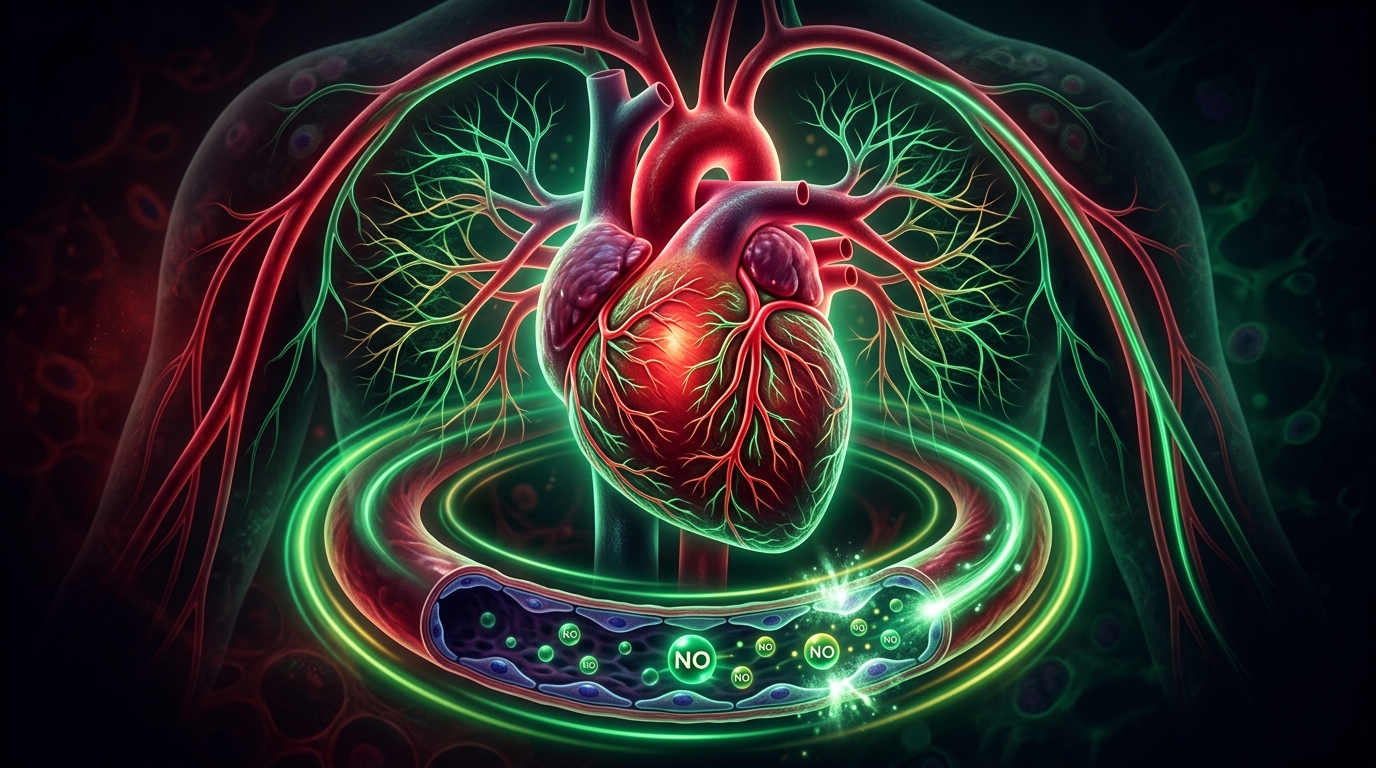
- Laminar Shear Stress: Steady, rhythmic blood flow exerts gentle frictional drag on the arterial endothelium, triggering Endothelial Nitric Oxide Synthase (eNOS) to produce nitric oxide ($\text{NO}$), causing sustained vasodilation.
- Natural Collateral Bypass (Arteriogenesis): Chronic laminar shear forces stimulate Vascular Endothelial Growth Factor (VEGF), causing tiny dormant arterioles around a blocked coronary vessel to widen and remodel into functional natural bypass channels.
- Plaque Stabilization: Aerobic endurance lowers systemic inflammation (hs-CRP), thickening the protective fibrous cap over vulnerable atheromatous plaques and preventing plaque rupture.
- Mitochondrial Upgrades in the Myocardium: Heart muscle cells increase mitochondrial density, enhancing cardiac efficiency and stroke volume without requiring dangerous spikes in heart rate or blood pressure.
2. Defining Safe Zone 2: The Talk Test & Lactate Threshold
For a cardiac patient, the goal is pure aerobic oxidation without spilling into anaerobic glycolysis (which produces excess lactic acid, catecholamines, and myocardial wall stress).
How to Pinpoint Your Zone 2 Intensity Safely
- The Nasal Breathing Test: You should be able to breathe comfortably exclusively through your nose during the entire session. If you are forced to gasp through your mouth, you have crossed into Zone 3.
- The Conversational "Talk Test": You can speak in full, complete sentences, but someone listening to you over the phone would clearly recognize that you are exercising.
- Rating of Perceived Exertion (RPE): On a scale of 1 to 10, Zone 2 feels like a 3 to 4 ("Comfortably challenging but sustainable for hours").
- Heart Rate Guidance: Typically between 60% to 70% of Maximum Heart Rate ($\text{HR}_{\text{max}} = 208 - (0.7 \times \text{Age})$). For patients on Beta-Blockers (such as Metoprolol or Bisoprolol), always use RPE and the Talk Test rather than standard age formulas, as medications artificially blunt heart rate response.
3. The 4-Pillar Cardiac Recovery Protocol
Pillar 1: Movement — Gradual Progression & Pacing
- Phase 1 (Weeks 1–4): 15–20 minutes of flat-surface walking or recumbent stationary cycling 3–4 days per week. Focus entirely on nasal breathing and rhythmic pacing.
- Phase 2 (Weeks 5–12): Progressively increase duration to 35–45 minutes, 4–5 days per week. Target a weekly volume of 150 to 180 minutes of Zone 2.
- Mandatory Warm-Up & Cool-Down: Always spend 8–10 minutes gently ramping up and cooling down to avoid sudden catecholamine surges and orthostatic pressure drops.
- Light Resistance & Grip Training: Maintain grip strength and upper body mobility using light dumbbells or resistance bands (avoiding breath-holding and the Valsalva maneuver).
Pillar 2: Fuel — Plaque-Stabilizing Mediterranean Lipids
- Extra Virgin Olive Oil (Oleocanthal): 2–3 tablespoons daily provides polyphenols that inhibit LDL oxidation inside arterial intima.
- High-EPA Omega-3 Marine Lipids (2,000–4,000 mg/day): Demonstrated in the REDUCE-IT Trial (NEJM) to reduce recurrent major adverse cardiovascular events by 25%.
- Viscous Soluble Fiber: 15g daily to trap bile acids and lower circulating ApoB particles.
Pillar 3: Fasting & Metabolic Calibration
- 14:10 Circadian Fasting: Restricting food to a 10-hour daytime window lowers nocturnal arterial stiffness, reduces fasting insulin, and prevents postprandial endothelial stunning.
Pillar 4: Sleep & Autonomic Balance
- 7.5–8.5 Hours of Sleep: REM and Stage 3 sleep lower nocturnal sympathetic tone, allowing heart rate and blood pressure to drop by 10–20% (Nocturnal Blood Pressure Dipping), which is critical for coronary endothelial repair.
4. Crucial Safety Rules: When to Stop Immediately
Always consult your treating cardiologist before starting any cardiac rehabilitation protocol. Stop exercising and seek immediate medical evaluation if you experience:
- Any sensation of retrosternal chest pressure, heaviness, squeezing, or pain radiating to the neck, jaw, or left arm.
- Sudden, unexplained shortness of breath disproportionate to exertion level.
- Dizziness, lightheadedness, or feeling faint.
- Sudden irregular, fluttering, or racing heartbeats (palpitations).
5. Medicine 3.0 Plaque Stabilization Biomarkers
For individuals with established coronary disease, longevity medicine establishes aggressive targets to ensure total plaque arrest:
| Biomarker | Conventional Medicine Target | Medicine 3.0 Secondary Prevention Target |
|---|---|---|
| ApoB | (Halts Plaque Growth) | |
| hs-CRP (Inflammation) | (Stabilizes Fibrous Cap) | |
| Resting Blood Pressure | ||
| Triglyceride / HDL | ||
| Fasting Insulin |
6. Peer-Reviewed Clinical Citations & Landmark Trials
Intensive Lifestyle Changes for Reversal of Coronary Heart Disease (Lifestyle Heart Trial):
Ornish D, Scherwitz LW, Billings JH, Gould KL, et al. "Intensive lifestyle changes for reversal of coronary heart disease." JAMA, 1998 Dec 16;280(23):2001-7.
🔗 PubMed PMID: 9863851 | DOI: 10.1001/jama.280.23.2001Exercise-Based Cardiac Rehabilitation for Coronary Heart Disease:
Anderson L, Thompson DR, Oldridge N, et al. "Exercise-based cardiac rehabilitation for coronary heart disease: Cochrane systematic review and meta-analysis." Journal of the American College of Cardiology (JACC), 2016 Jan;67(1):1-12.
🔗 PubMed PMID: 26730878 | DOI: 10.1016/j.jacc.2015.10.044Mitochondrial Function and Exercise Intensity Prescription (Zone 2 Physiology):
San-Millán I, Brooks GA. "Assessment of Metabolic Flexibility by Means of Measuring Blood Lactate, Fat, and Carbohydrate Oxidation in Athletes and Metabolic Disease Patients." Sports Medicine, 2018 Jan;48(2):467-479.
🔗 PubMed PMID: 29294246 | DOI: 10.1007/s40279-017-0842-5Regular Physical Exercise Corrects Endothelial Dysfunction in Coronary Artery Disease:
Hambrecht R, Wolf A, Gielen S, et al. "Effect of exercise on coronary endothelial function in patients with coronary artery disease." New England Journal of Medicine (NEJM), 2000 Feb 17;342(7):454-60.
🔗 PubMed PMID: 10675425 | DOI: 10.1056/NEJM200002173420702Apolipoprotein B (ApoB) and Residual Cardiovascular Risk in Statin-Treated Patients:
Marston NA, Giugliano RP, Melloni GEM, et al. "Association of Apolipoprotein B with Cardiovascular Outcomes in Patients Treated with Statin Therapy." JAMA Cardiology, 2022 Mar 1;7(3):250-256.
🔗 PubMed PMID: 34935848 | DOI: 10.1001/jamacardio.2021.5083
Recommended Reading
To deepen your understanding of cardiovascular longevity, arterial plaque stabilization, and safe exercise physiology, we recommend these foundational books:
Dr. Peter Attia's Outlive: The Science and Art of Longevity
The authoritative guide detailing coronary atherosclerosis pathophysiology, ApoB particle burden, and the exact Zone 2 exercise blueprints to prevent cardiac death.
👉 Get Outlive on AmazonDr. Matthew Walker's Why We Sleep: Unlocking the Power of Sleep and Dreams
Learn why restorative sleep is the premier vascular medicine that lowers blood pressure, prevents coronary spasm, and supports myocardial recovery.
👉 Get Why We Sleep on AmazonJames Clear's Atomic Habits
Sustainable cardiac rehabilitation is a lifelong practice. Learn how to automate daily Zone 2 walking habits and consistent Mediterranean nutrition without burnout.
👉 Get Atomic Habits on Amazon
Actionable Longevity Checklist: Next Steps
Scientific insights have maximum power when translated into micro-habits. Check off your daily targets:
Log in Habitspan Daily Protocol (15s)
Lock your 4 biological pillars daily with zero friction and zero tedious data entry.
Calculate Your Biological Cell Age
Assess your functional longevity score against chronological birth age using Medicine 3.0 metrics.